The Single Hire of a School Nurse Makes an Exponential Difference
December 17, 2025

December 17, 2025
By Sherrie Page Guyer, DNP, MSN, RN
Virginia’s public schools, along with the rest of our nation, continue to grapple with limited funds and budget cuts. While hiring and paying great teachers is the priority, it is essential to recognize that even preeminent educators can’t teach a child who is too unwell to focus on lesson plans. School nurses are key in making sure that all youth have access to the best education possible, by helping students be as healthy as possible. Despite limited resources, an RN for every school should be considered essential. The return on investing in this single hire is exponential, affecting the present day and future well-being and academic success of every student; the ripple effect extending to longevity, quality of life, and increased economic opportunities for individuals, their families, and communities.
The need for school nurses is more critical than ever due to the rise in chronic conditions and increasing concerns about mental health. Students who are medically sick or struggling with anxiety aren’t going to be optimal learners. “My clinic is one-stop shopping,” Virginia Beach-based school nurse Tiffany Bernstein, RN tells me. “In the course of a day’s work, I manage medications, chronic illnesses, provide first aid, and assess multiple walk-ins. My goal is to evaluate, treat, and get students back to class as soon as possible, so that they don’t miss important academic time.”
Bernstein goes on to explain, “School nurses are trained to recognize medical and psychiatric symptoms, administer medications, and act swiftly in emergencies. Based on my nursing assessment, I can identify early signs of medical concerns or dysfunctional stress and provide immediate care or referrals to help keep issues from escalating. On the other side of the equation, I’ve seen the difference a school nurse makes when assessing and managing medical emergencies that may have otherwise become life-threatening, including anaphylactic allergic reactions and low-blood sugar requiring EMS intervention.”
The gold standard of professional organizations like the American Academy of Pediatrics and the National Association of School Nurses (NASN) is full-time access to a professional registered nurse during the school day, yet extreme disparities exist nationwide, especially in rural areas where only 56.2% of schools employ a full-time school nurse compared to 70.3% of urban schools. Keep in mind that according to the US Department of Housing and Urban Development (2017), eighty-eight percent of Virginia is rural.
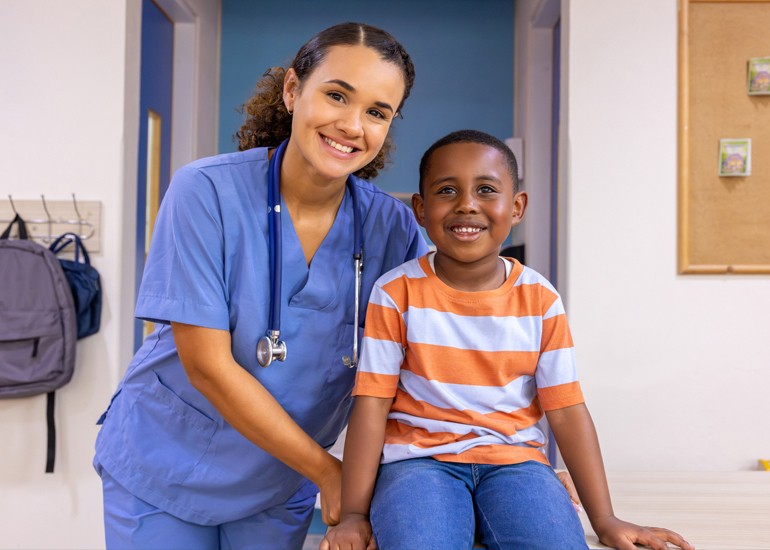
Having grown up in Glasgow, Virginia (population 1,053), Pamela Byrnes DNP, PMHNP-BC, a pediatric mental health nurse practitioner, is a strong advocate for rural nursing and giving back to the kinds of small communities where she was raised. “School nurses are often the most accessible healthcare providers children have in rural areas. Teachers frequently share their concerns with the school nurse, who then helps gather collateral information that’s critical to understanding what’s happening daily. Their perspective, along with what they hear from teachers and observe themselves, helps me form a more complete view of a child’s functioning at school and guides my clinical decisions. School nurses notice early signs of concern, offer health education, and help connect families to care when it’s needed. Their reach goes far beyond the school walls, especially in close-knit communities where families often stay for generations, improving the health and well-being of the whole community.”
Byrnes credits school nurses with helping her provide the optimal care for her psychiatric patients, especially adolescents living in rural areas. “I often work with school nurses to help coordinate care for the kids I treat. I’m based in Albemarle County, and many of my patients lack the ability to see me in-person,” Byrnes tells me. “Reasons are many and varied. Sometimes it’s because of a lack of or the cost of transportation, or it may be because a caregiver can’t take off work or find childcare for other children to make the appointment. Whatever the reason, this is where school-based telehealth makes a big difference. I’m grateful to the school nurses who’ve helped arrange therapy and med check visits via telehealth for students during the school day. If it weren’t for this coordination of care, many of these kids would fall through the cracks and not receive needed mental health care.”
Health and learning go hand in hand. Students who don’t feel well usually underperform. School nurses help reduce absenteeism by addressing health problems early and keeping students in school when it’s safe to do so. They also greatly reduce the burden of student health needs that is placed on educators in schools without an RN. Teachers are not medical professionals, yet in schools without nurses, they often find themselves managing health issues they aren’t trained to handle.
“Students can’t learn if they aren’t getting the care they need, and teachers can’t teach if they are overwhelmed managing the medical needs of students,” explains Wrenn Schoeffler, a middle school math teacher in Chesterfield County. “I remember the year I taught a student with frequent seizures; I thank God I had a direct line to our school nurse and that the ultimate medical responsibility did not fall to me when she seized.”
Beth Skidmore, a retired Richmond-based elementary school teacher, recalls her school nurse relationships with gratitude. “The school nurses I worked with were always empathetic, compassionate colleagues with a wealth of knowledge. I always appreciated their help to take care of illnesses and make the call to parents to pick up a sick child, allowing me to focus on my other students.” In schools without a school nurse, teachers must stop class instruction to tend to student health needs and the entire class misses prime academic time.
As for parents, Julie Wade speaks from experience when she tells me without reservation that every school-aged child and teen needs access to a full-time registered nurse during the school day. Her vignette does an excellent job of illustrating the difference a school nurse makes to students, parents, and teachers. Keep in mind that this is just one example of one student with a chronic health condition. Currently, the CDC reports that 40% of children have a chronic health condition.
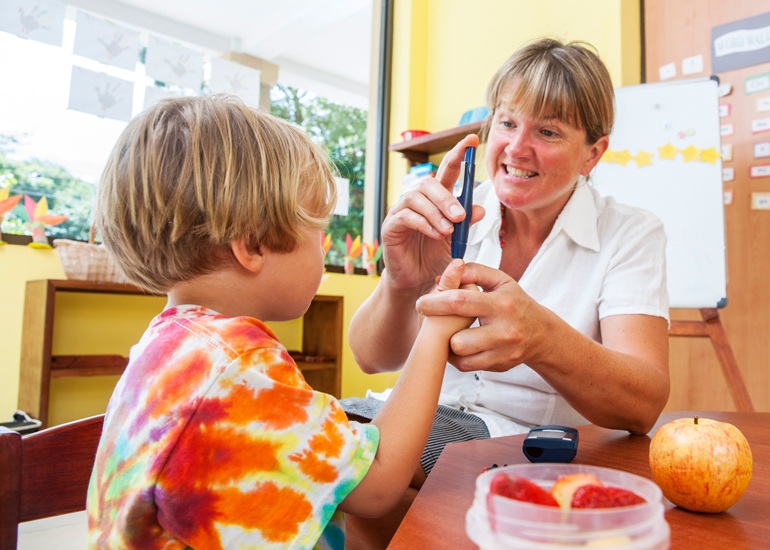
“My daughter, now a healthy, independent adult, was diagnosed with insulin-dependent diabetes at age eleven in the middle of the school year. This is a disease, which requires 24/7 management of insulin injections and can have life threatening consequences without immediate care when in a health crisis. We were extremely fortunate that she had access to a full-time registered nurse while in elementary and middle school. The clinic provided her a safe place to go and someone who could help her decide on insulin and glucose doses at a time when she was feeling sick and mentally impaired. Her school nurse kept her healthy, safe, and provided emotional support, all of which helped her stay in school and excel academically.”
Ms. Wade goes on to juxtapose this experience when her daughter started ninth grade. “We were excited when we found out that our daughter was accepted to a public regional magnet high school in Richmond, Virginia. However, we were shocked to find out there was no full-time school nurse. I can’t tell you how hard it was to lose our peace of mind. I’d begin each parent-teacher conference explaining how to revive my daughter with injectable glucagon if she had a medical emergency. This is just not right. Teachers went to college to be educators, not nurses, and we already ask far too much of teachers outside of their job responsibilities.”
Communities need to understand hard truths about their zip code’s health and longevity and should consider how an investment in a school nurse could make a difference. In Virginia, areas like Great Falls, rich in resources, life expectancy averages 85.2 years, compared to lower income areas, like in Petersburg, where life expectancy averages 64.9 years. “It would behoove communities to think of the school nurse as directly affecting the public health of their community,” Shelly Smith, PhD, DNP, ANP-BC, a nursing workforce expert and associate dean of the University of Virginia School of Nursing, tells me. “School districts have the ability to get creative,” Smith points out. “Using a school nurse to coordinate care with local dentists, telehealth options, or immunization clinics, are just a few of many opportunities a school nurse can bring to a school’s community to enhance the health of an under-resourced zip code.” Smith, active in Virginia’s legislature, encourages focusing on grassroots change, “Go to your local school board meetings and find out about budget allocation and school nursing. Speak up, write letters to your representatives… the actions of everyday citizens make a real difference.”
Schools, parents, administrators, and policy makers must recognize the value a full-time RN brings to the performance of the entire institution and fight to fund the position. While it is unfair that some students have access to a nurse every single day of the school year and others do not, the inequity goes beyond students to affect teachers, parents, and the community. When students are cared for at school, their families can focus on work, teachers can focus on teaching, and entire neighborhoods are healthier. This VEA tagline says it best: Strong Schools mean Strong Communities. For the strongest schools and communities, investing in a full-time RN makes a lot of sense.
Sherrie Page Guyer, DNP, MSN, RN, a former school nurse, currently works as a Nursing Instructor at the University of Virginia School of Nursing.
According to a poll conducted by Virginia Commonwealth University, 66% of Virginians say public schools do not have enough funding to meet their needs.
Learn More